
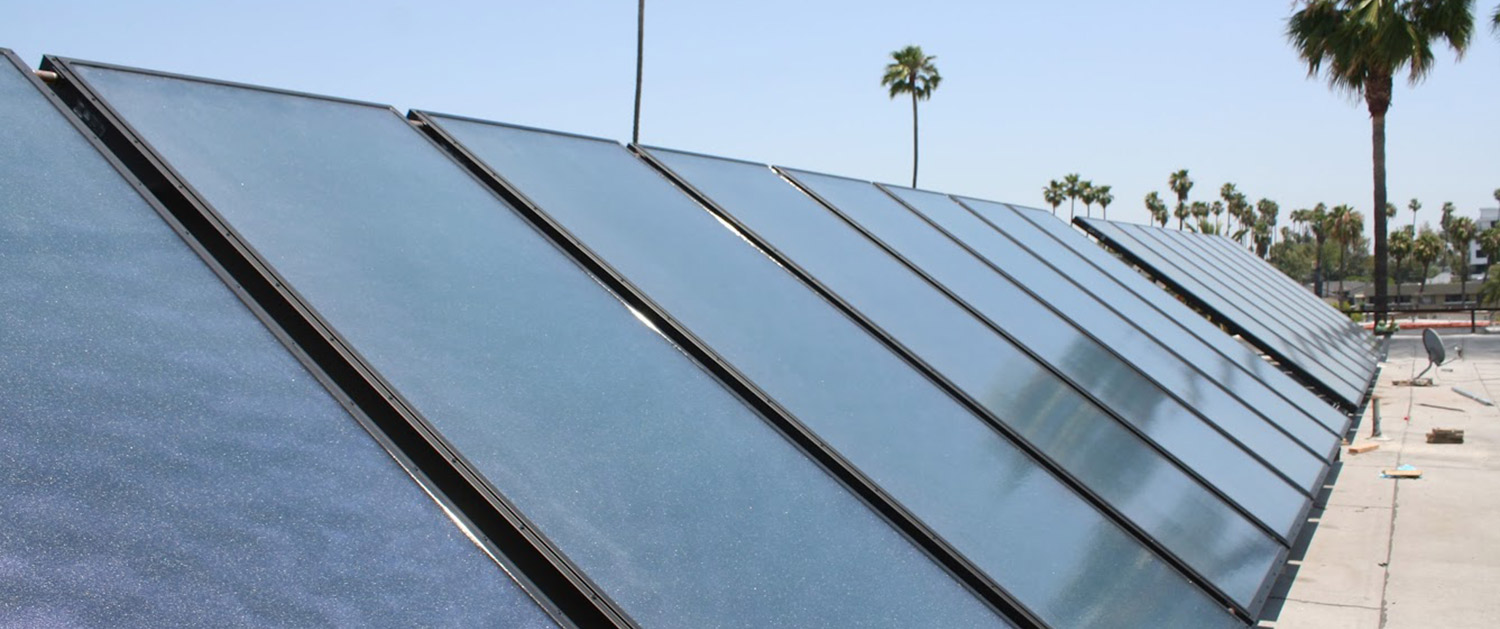

Oasis All Copper Solar Pool Heating Collectors
Fire-Resistant Solar Pool Collectors Built for Modern California ProjectsThe Oasis collector from SunEarth is a copper solar pool heating collector built for California's fire exposure, UV intensity, and evolving energy code requirements. The all-copper absorber resists UV degradation that shortens the life of polymer pool panels, delivering direct solar heat to your pool without drawing from the electrical grid. For best system performance, SunEarth recommends pairing Oasis with a stainless steel or titanium heat exchanger.
Fun Fact: The White House pool and spa is heated by SunEarth Oasis all-copper pool collectors (see photo gallery below). The roof-integrated installation was conceived by Solar Design Associates of Harvard, MA.
How All-Copper Construction Improves Solar Pool Heating Performance
Copper transfers heat more efficiently than plastic or polymer materials, which means an all-copper solar pool heating collector delivers more usable energy to your pool water per square foot of collector area. On California rooftops, where available mounting space is often limited, that thermal conductivity advantage can reduce the total number of panels needed to reach target pool temperatures.
When used with a stainless steel or titanium heat exchanger, Oasis collectors are better protected from chemical damage caused by pool water. This extends system life and reduces long-term maintenance requirements compared to direct-flow configurations, where pool chemistry makes direct contact with the collector circuit. Oasis collectors are IAPMO certified, providing third-party verification of performance that supports plan check and permitting submissions.
If your project also requires domestic hot water or space heating, SunEarth's Empire Series and ThermoRay Series glazed flat plate collectors are engineered for those higher-temperature uses and can be integrated as part of a broader solar thermal system on the same property.
Title 24 Solar Pool Heating Requirements and What They Mean for Your Project
California's Title 24 Energy Code now requires that new pools and qualifying renovations use a renewable energy source as the primary heat source. Gas heaters can no longer serve as the main heating system on compliant projects. This requirement applies across residential new construction and specific renovation scenarios, and it has changed how pool heating systems are designed, specified, and permitted across the state.
What California's Code Actually Requires
Under current Title 24 rules, solar thermal pool heating systems must be properly sized relative to pool surface area and local climate zone. The code does not treat solar as a supplemental option -- it requires solar to carry the primary heating load. This means system sizing must be addressed at the design phase. Undersized or improperly documented systems may not pass plan check, which can delay project completion and add cost.
How Oasis Supports Solar Pool Heating Compliance
Oasis copper solar pool heating collectors provide a direct renewable heat source that, when properly sized, satisfies the Title 24 solar pool heating requirement. We work with installers and designers during the specification phase to size systems for specific pool dimensions, climate zones, and occupancy schedules. Hybrid solar plus heat pump configurations are also available for projects where extended season performance or backup capacity is needed to meet solar pool heating compliance thresholds.
Documentation Support for Permitting
Meeting code is only part of the process. Solar pool heating compliance requires documentation that demonstrates code alignment during permitting review. SunEarth provides specification sheets, installation manuals, and IAPMO certification records to support your permit package. Having this documentation in hand before plan check reduces delays and keeps your project on schedule.
Fire Resistant Solar Pool Collector Design for California Installations
Wildfire risk is a practical design consideration for rooftop solar installations across much of California. Polymer pool collectors can be damaged or destroyed under fire exposure, while copper is a non-combustible material that holds up under high-heat conditions. For installations in Wildland Urban Interface zones or communities with fire rating requirements, a fire resistant solar pool collector like Oasis provides a material advantage that plastic panels cannot match.
Copper's resistance to sustained heat and fire exposure also contributes to overall system durability beyond wildfire events. High ambient temperatures and intense sun accelerate the degradation of polymer materials over time, leading to leaks, reduced flow, and shortened panel life. Oasis collectors are engineered for long-term performance under California's most demanding conditions, making them a practical investment for any pool project in the state.
Size and Specify Your Oasis System with SunEarth
Whether you are planning a new residential pool, a multifamily property installation, or a commercial aquatic facility, our team can help you size and specify an Oasis copper solar pool heating system for your project. We support California installers and design teams with technical guidance on Title 24 solar pool heating requirements, system layout, heat exchanger selection, and hybrid configurations.
Tailored Energy Solutions to Fit your Needs
Contact SunEarth for a free consultation and discover how solar water heating can transform your home or business.


Frequently Asked Questions
Yes. While Oasis is designed with California's climate and energy code requirements in mind, the collectors can be installed in any state. Copper construction performs well in high-UV environments, making Oasis a practical choice in the Southwest, Florida, Hawaii, and other warm-climate markets. Title 24 is a California-specific regulation, but other states have their own solar pool heating incentive programs and building energy codes that solar thermal can help satisfy.
The number of collectors depends on your pool's surface area, your local climate zone, the desired season extension, and whether the system uses direct or indirect flow with a heat exchanger. Solar pool heating designers typically size collector area at 50 to 100 percent of pool surface area, but actual sizing should be confirmed by a qualified solar installer or through SunEarth's technical team based on your site-specific conditions.
In most California climate zones, solar pool heating extends the swim season meaningfully into fall and through parts of winter, particularly in Southern California and the Central Valley. Performance during cooler months depends on the number of sunny days, ambient temperatures, and system sizing. For year-round performance in cooler Northern California climates, a hybrid solar plus heat pump configuration can maintain comfortable water temperatures when solar gain is lower.
Both solar thermal and heat pumps can be used in Title 24 compliance strategies, but they work differently. A copper solar pool heating collector uses no electricity to transfer heat; it moves solar energy directly into the pool water through the collector circuit. A heat pump uses electricity to extract heat from ambient air. In California's high-sun climate, solar thermal typically carries a lower operating cost. Some Title 24 projects use a solar plus heat pump hybrid to meet compliance while maintaining water temperatures across a wider range of conditions.
Copper can be sensitive to certain pool water chemistry conditions, particularly low pH or high levels of dissolved minerals. This is one reason SunEarth recommends using Oasis with a stainless steel or titanium heat exchanger in indirect-flow configurations, which isolates the collector circuit from direct contact with pool water. Maintaining balanced pool chemistry and having a qualified installer review your water conditions before system design are both recommended steps for long-term performance.