
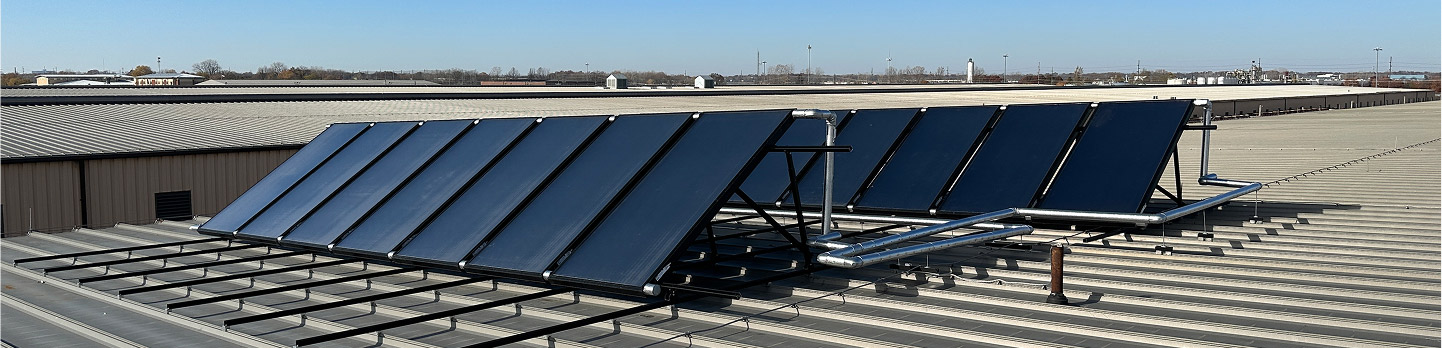
What California’s 2026 Energy Code Means for Solar Thermal and Pool Heating
A Shift Toward Performance-Based Heating Solutions
As of January 1, 2026, updates to California’s Title 24 California Energy Code are reshaping how buildings approach water heating and pool heating compliance.
While much of the conversation has focused on electrification, the reality is more nuanced:
California is prioritizing performance - not just technology.
And in that framework, solar thermal systems are uniquely positioned to deliver measurable results.
What Changed in Title 24 (2026 Update)
The latest code cycle reinforces several key priorities:
- Reduced reliance on fossil fuel–based water heating
- Increased emphasis on time-dependent valuation (TDV) energy performance
- Stronger requirements for renewable integration in high-load applications
- Expanded pathways for compliance using hybrid and renewable systems
For applications like multifamily housing, hotels, and pools, these changes are especially impactful.
Why Solar Thermal Aligns with Title 24
Unlike electric-only systems, solar thermal directly offsets thermal loads at the source.
This creates several advantages under Title 24 modeling:
1. Direct Thermal Energy = Higher TDV Value
Solar thermal systems generate heat without electrical conversion, reducing peak demand and improving modeled performance.
2. Proven Compliance Path for Pool Heating
Title 24 recognizes solar pool heating as a primary compliance strategy.
Typical guidance includes:
- Collector surface area sized at approximately 60–65% of pool surface area, depending on application type
- Systems designed to meet or exceed annual heating demand
3. Reduced Grid Dependency
By offsetting water heating loads directly, solar thermal systems reduce reliance on grid electricity—an increasingly important factor in California’s energy strategy.
Pool Heating: Where Solar Thermal Leads
Pool heating remains one of the clearest and most cost-effective applications for solar thermal under Title 24.
Why it works:
- High, consistent thermal demand
- Daytime load alignment with solar production
- Minimal operational complexity
What’s changing:
The conversation is shifting from:
- Gas vs solar
To:
- Heat pump vs solar
In this new landscape, solar thermal stands out as:
- Lower operating cost over time
- No electrical demand increase
- Proven compliance pathway
Solar Thermal vs Heat Pumps: A Practical Comparison
| Factor | Solar Thermal | Heat Pump |
|---|---|---|
| Energy Source | Direct solar heat | Electricity |
| Peak Grid Impact | None | High |
| Operating Cost | Low | Moderate to high |
| Title 24 Compliance | Strong | Conditional |
| System Complexity | Moderate | Higher |
Key takeaway:
Heat pumps are part of the solution, but solar thermal addresses the load directly.
Commercial and Multifamily Implications
For larger systems, the 2026 code reinforces the need for integrated system design.
Solar thermal plays a critical role in:
- Central plant water heating
- District energy strategies
- Hybrid systems paired with heat pumps
This allows project teams to:
- Reduce system size requirements for electric equipment
- Improve compliance margins
- Deliver long-term operational savings
Design Considerations for 2026 Compliance
To maximize performance and ensure compliance:
- Size collector arrays based on actual load profiles
- Integrate with thermal storage for load shifting
- Coordinate with modeling tools such as EnergyPro
- Ensure proper mounting and system durability for long-term output
(Yes, this is where details like mounting systems matter.)
The Bigger Picture: Performance Over Narrative
The 2026 Title 24 update reflects a broader shift in the industry:
It’s no longer about choosing a technology.
It’s about delivering measurable performance.
Solar thermal systems do exactly that by providing:
- Immediate load reduction
- Proven reliability
- Scalable integration into modern building systems
The Path Forward
As California continues to lead in building energy policy, the role of solar thermal is becoming clearer:
Not as an alternative.
But as a primary solution for thermal load reduction.
For engineers, developers, and contractors navigating Title 24 in 2026, the question isn’t whether to consider solar thermal.
It’s how to integrate it effectively.
Designing for Title 24 compliance?
Connect with SunEarth to explore solar thermal solutions built for California’s evolving energy landscape.