
What Is Thermal Energy Storage? Solar Thermal Storage Systems for Efficient Building Design
Why Storage Changes the Conversation
In building energy discussions, most attention is placed on how energy is generated.
Far less attention is given to how it is stored.
Yet for thermal systems, storage is what enables consistency, reliability, and performance.
Hot water demand does not always align with energy production. This mismatch is one of the core challenges in building design.
Thermal energy storage solves it.
What Is Thermal Energy Storage
Thermal energy storage (TES) captures heat when it is available and stores it for later use.
In solar thermal systems, this typically means:
- Storing heated water in insulated tanks
- Delivering that energy during periods of demand
- Reducing reliance on backup heating systems
Unlike electrical storage, thermal storage is:
- Simple
- Efficient
- Proven across decades of use
Aligning Supply and Demand
Solar energy is most abundant during the day.
Hot water demand often peaks:
- Early morning
- Evening
- During periods of high occupancy
Thermal storage bridges this gap by:
- Capturing energy during peak solar production
- Delivering it during peak usage
This allows systems to operate more efficiently without oversizing equipment.
Why It Matters for Decarbonization
Reducing emissions is not just about switching energy sources. It is about reducing how much energy is required from those sources.
Thermal energy storage enables:
- Greater utilization of renewable heat
- Reduced reliance on fossil fuel backup systems
- Lower electrical demand when paired with hybrid systems
In the context of Scope 1 emissions, this is critical.
Storage allows renewable heat to displace fuel-based heating more consistently, not just when the sun is shining.
A Natural Pairing with Solar Thermal
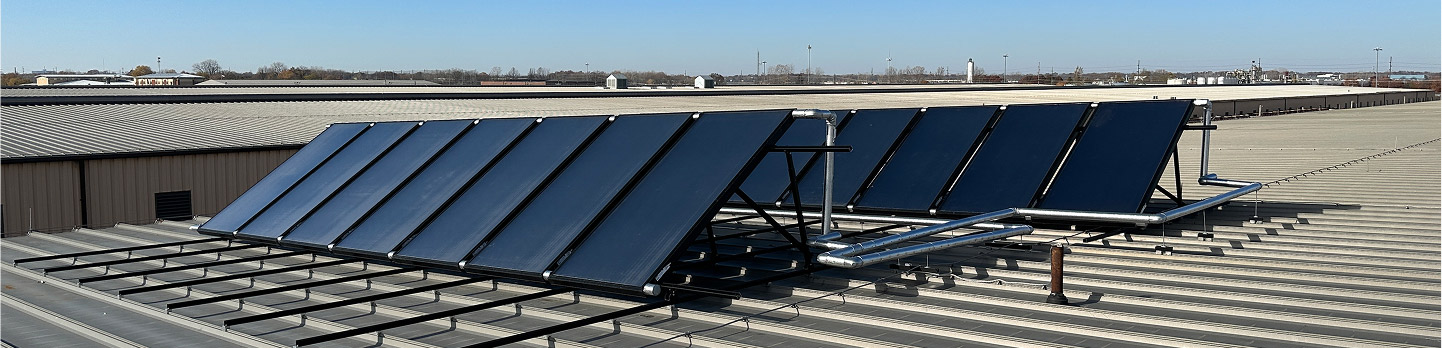
Solar thermal and thermal storage are designed to work together.
Collectors generate heat.
Storage preserves it.
This pairing creates a system that is:
- Stable
- Predictable
- Scalable
Without storage, solar contribution is limited to real-time production.
With storage, solar becomes a reliable energy source across the entire day.
Applications Across the Built Environment
Thermal energy storage is particularly effective in applications with variable or high-demand loads:
- Multifamily housing
- Hotels and hospitality
- Healthcare facilities
- Industrial and process heating
In these environments, storage allows systems to:
- Manage peak demand
- Improve system efficiency
- Reduce operating costs
Integration with Modern Systems
Thermal storage is not a standalone solution. It is part of a broader system strategy.
It integrates with:
- Solar thermal collectors
- Boilers and backup systems
- Heat pumps
- Central plant infrastructure
This allows engineers to design systems that:
- Balance load across multiple sources
- Optimize performance under varying conditions
- Reduce strain on any single component
Reducing System Complexity Through Storage
While it may seem counterintuitive, adding storage often simplifies system performance.
By stabilizing energy delivery, storage:
- Reduces cycling of backup systems
- Improves control strategy effectiveness
- Extends equipment lifespan
It acts as a buffer, absorbing variability and delivering consistency.
Designed for Long-Term Performance
Thermal storage systems are built for durability.
With proper design and integration, they:
- Maintain performance over long periods
- Require minimal maintenance
- Provide consistent value across decades
This aligns with the broader role of solar thermal as long-term infrastructure.
A System-Level Advantage
In modern building design, performance is defined by how systems work together.
Thermal energy storage is the component that connects:
- Energy generation
- Energy demand
- System reliability
It allows renewable heat to be used more effectively, more consistently, and more strategically.
Looking Forward
As buildings move toward performance-based design and decarbonization targets, storage is becoming increasingly important.
It enables:
- Greater flexibility in system design
- Improved alignment with real-world usage patterns
- Stronger integration of renewable technologies
Not Optional. Essential.
Thermal energy storage is not an enhancement.
It is a requirement for systems designed to perform at a high level.
By capturing energy when it is available and delivering it when it is needed, storage transforms solar thermal from a generation technology into a complete energy solution.