
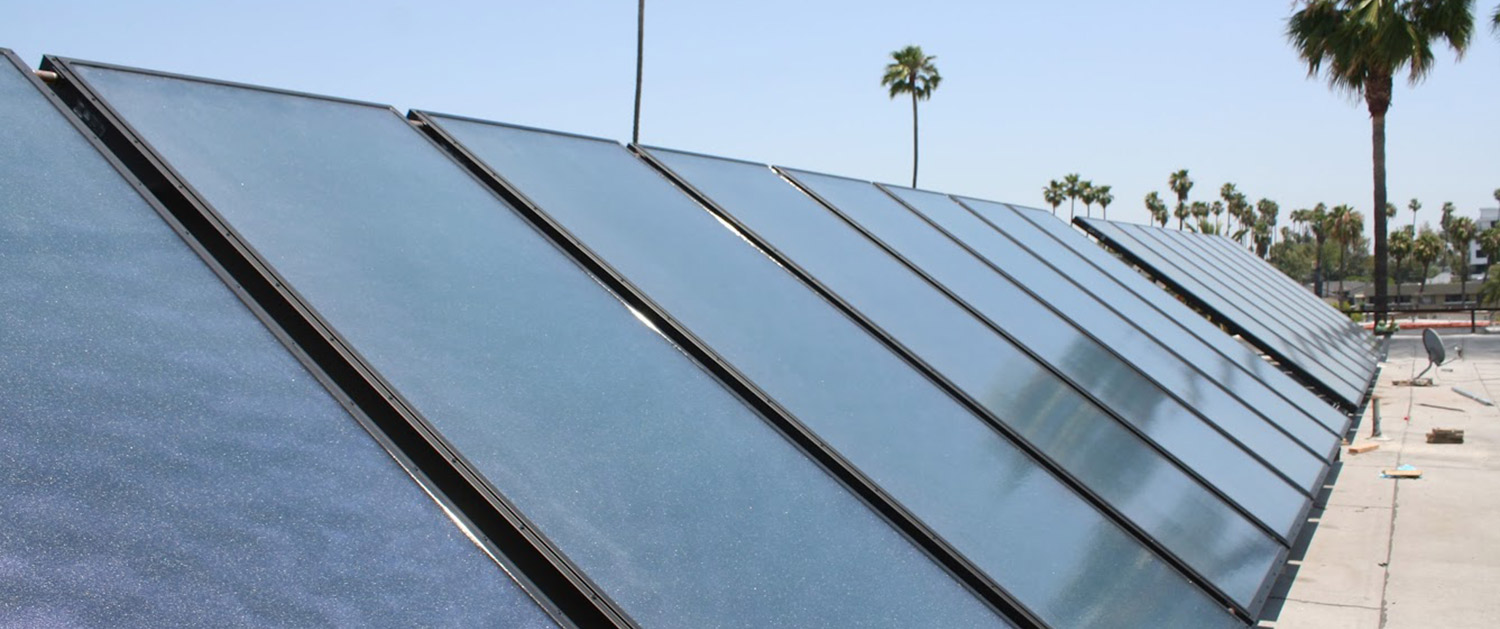

Solar Hot Water Heating Systems
SunEarth manufactures solar water heating systems for residential, commercial, and industrial applications across a wide range of climates. Our system families include direct, indirect glycol, drainback, and passive configurations, allowing contractors and design professionals to match the system to local climate, water quality, hot-water demand, building conditions, and code requirements.
SunEarth offers ICC-SRCC certified collectors and solar water heating system configurations, with certifications and listings varying by product and system design. These third-party certifications provide recognized performance and compliance documentation that may support code review, incentive qualification, and system specification.
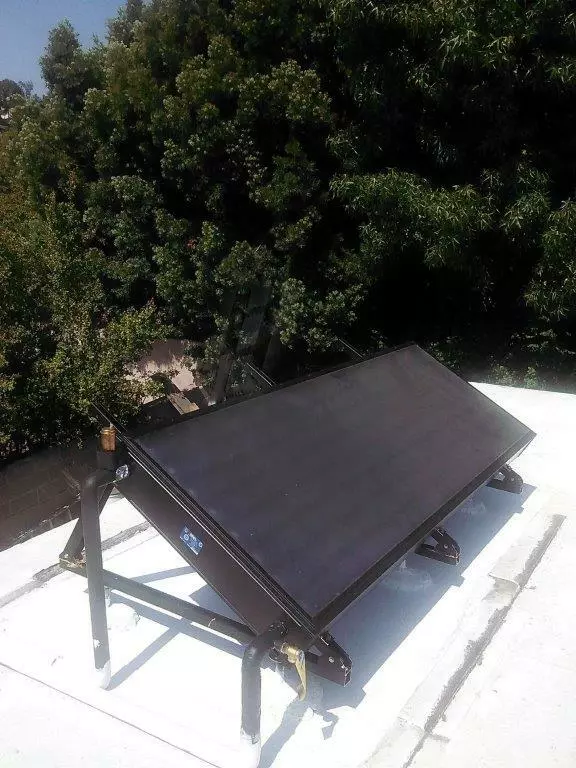

How Solar Water Heating Works

Compare Solar Water Heating Systems
| System Type | Collector-Loop Fluid | Pump | Freeze Protection | Common Fit |
|---|---|---|---|---|
| Direct / Open-Loop | Potable water | Yes | Climate-dependent | Warm, nonfreezing climates |
| Indirect / Glycol | Heat-transfer fluid | Yes | Closed-loop fluid provides freeze protection | Cold and mixed climates |
| Drainback | Water or approved heat-transfer fluid | Yes | Fluid drains from collectors and exposed piping when circulation stops | Systems designed with continuous drainage |
| Passive / ICS | Potable water | No | Climate-dependent | Warm climates and suitable roof conditions |
What Determines the Right System Configuration?
Solar water heating systems are selected based on more than building size. The most important design considerations include:
-
Climate and freeze exposure: Determines whether direct, glycol, drainback, or passive configurations are appropriate.
-
Water quality: Mineral content and water chemistry can affect the choice between direct and indirect circulation.
-
Hot-water demand: Daily volume and usage patterns influence collector area, storage, and backup-heating requirements.
-
Roof and structural conditions: Available space, orientation, shading, mounting surface, and structural capacity affect system layout.
-
Equipment and piping layout: Collector and storage locations influence circulation, drainage, pumping, and heat-exchange design.
-
Codes and project requirements: Local plumbing, mechanical, structural, and permitting requirements must be considered.
Final system selection and sizing should be completed by a qualified contractor or design professional.
Certifications and Design Documentation
SunEarth offers solar collectors, components, and packaged system configurations with applicable third-party certifications and listings, including ICC-SRCC and IAPMO. Select residential solar water heating systems may also meet applicable ENERGY STAR requirements. Certifications and listings vary by product, model, and system configuration.
These listings provide documented performance and compliance information that may support system specification, code review, permitting, and participation in qualifying state, local, or utility incentive programs. Final eligibility and code acceptance depend on the selected system, installation, jurisdiction, and current program requirements.
Contractors, engineers, and design professionals can access SunEarth’s CAD drawings, BIM models, specifications, installation manuals, and technical literature through our design resources.
Pressurized vs. Unpressurized Solar Storage Tanks
Solar thermal storage can operate under system pressure or at or near atmospheric pressure. This distinction affects how the tank is constructed, how heat is exchanged, how the tank connects to the system, and which installation requirements apply.
The questions below cover what separates a pressurized tank from an unpressurized one and when each fits.
What is a pressurized solar storage tank?
A pressurized solar storage tank operates as part of a closed or potable-water system under system pressure. Depending on the configuration, domestic water or heat-transfer fluid may be stored in the tank.
What is an unpressurized solar tank?
An unpressurized storage tank operates at or near atmospheric pressure. Heat is commonly transferred to or from the tank through an internal or external heat exchanger rather than supplying stored tank water directly to plumbing fixtures.
What is the difference between pressurized and unpressurized
A pressurized tank is designed to operate under system pressure, while an unpressurized tank operates at or near atmospheric pressure. This distinction affects tank construction, piping, heat-exchange design, and how the storage is integrated into the complete solar thermal system.
Active v. Passive Solar Water Heating Systems
Whether a system needs a pump determines how SunEarth classifies it, and that classification affects maintenance, freeze protection, and where the tank can sit relative to the collector.
What is an active solar water heating system?
An active solar water heating system uses a pump to circulate water or heat-transfer fluid between the solar collectors and the rest of the system. A controller typically starts circulation when useful solar energy is available. Active systems can use direct, indirect glycol, or drainback configurations.
What is a passive solar water heating system?
A passive system operates without a circulation pump. In an integral collector-storage system, water is heated within a roof-mounted collector-storage unit before flowing to the conventional water heater or point of use.
What is the difference between active and passive solar water heating systems?
An active system uses a circulation pump; a passive system does not. Passive integral collector storage systems heat water within a roof-mounted collector-storage unit, while active systems circulate water or heat-transfer fluid between separate collectors and storage. The appropriate configuration depends on climate, freeze exposure, water quality, roof and equipment layout, structural conditions, hot-water demand, and applicable codes.
Tailored Energy Solutions to Fit your Needs
Every building has different hot water demand, roof orientation, and code requirements. SunEarth can support homeowners, contractors, distributors, engineers, and facility teams in identifying an appropriate system configuration.