
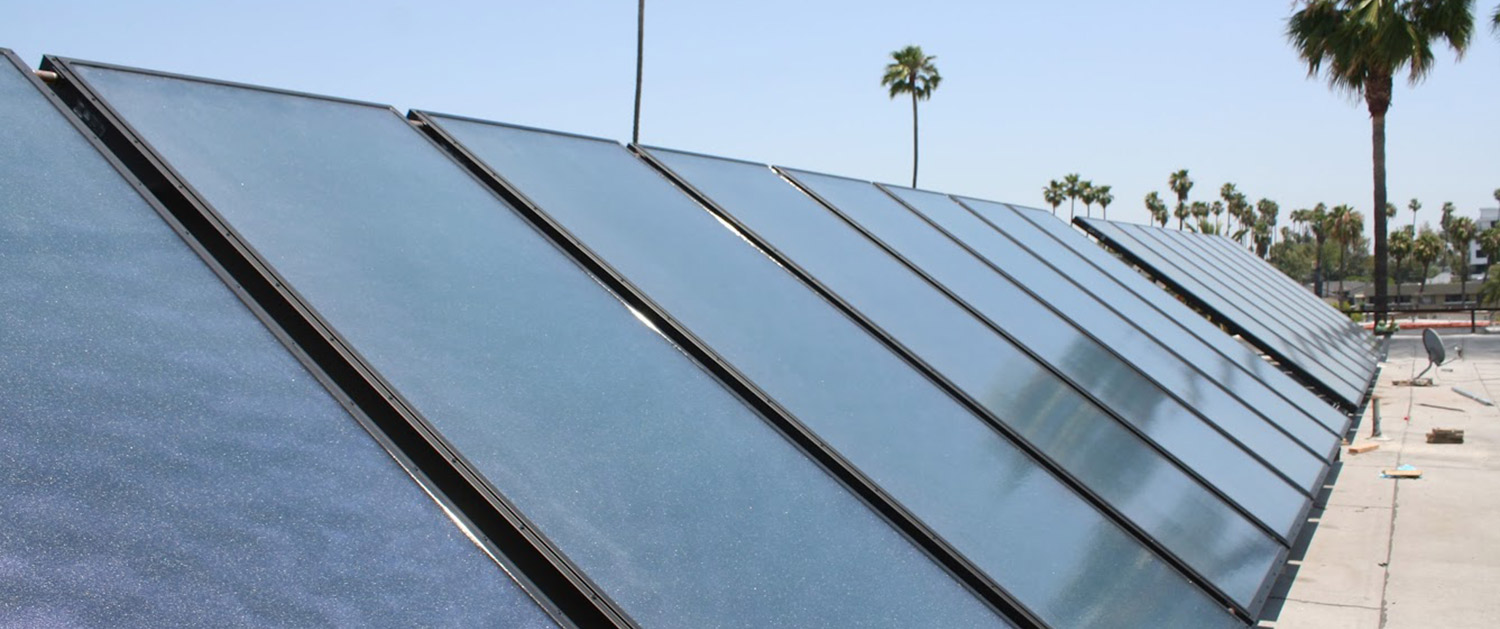

SunEarth Solar Hot Water Heating Systems
Solar hydronic heating uses SunEarth's solar collectors to supplement water and space heating in residential and commercial buildings, cutting the fuel or electricity load on the existing system rather than replacing it. Solar heat can be integrated with appropriately designed hydronic distribution systems, including radiant heating, low-temperature radiators, and hydronic coils.
SunEarth offers solar water heating products and system configurations for residential, commercial, and industrial applications, with applicable certifications and listings varying by product and system design, including ICC-SRCC and IAPMO. These listings provide performance and compliance documentation that may support system specification, code review, permitting, and participation in qualifying state, local, or utility programs.
Click here to download SunEarth's design files, including 2D CAD drawings, BIM models, specifications, videos, and related documents. Additional resources are available on BIM Objects.
How Solar Hydronic Heating Works
A SunEarth solar hydronic system captures solar energy through collectors and transfers that heat into a building's hydronic heating system or thermal storage. Solar fluid absorbs heat in the collector, a pump station circulates that fluid through a heat exchanger, and the heat transfers into the storage tank or directly into the heating distribution. A controller manages the pumps automatically.
System controls manage solar collection and circulation based on temperatures and the specific system design. Auxiliary heating can provide additional heat when solar energy is insufficient.
Where Solar Hydronic Heating Fits in Your Building
Buildings with water-based heating systems can be candidates for solar hydronic integration, but system design depends on required water temperatures, heating loads, existing equipment, climate, storage, and available solar energy.
Potential applications can include:
-
Radiant floor heating, where warm water runs through tubing under the floor.
-
Low-temperature hydronic radiators or other distribution equipment designed around compatible supply-water temperatures.
- Air-handling systems incorporating appropriately designed hydronic heating coils.
Active v. Passive Solar Water Heating Systems
What is an active solar water heating system?
Whenever SunEarth uses the term active when referring to a solar water heating system, we are referencing the existence of a pump. In active solar water heating systems, water is pumped to the collector to be heated. Then the water travels through the collector, exits the collector, and then flows back down to the storage tank. Active systems can be either direct or indirect.
What is a passive solar water heating system?
In a passive solar water heating system, there are no moving components. Basically, the ICS, integrated collector storage, sits on the roof, gets filled with pressure, heats the water, and then the water travels to your heater. There are no moving parts or pumps involved in the process.
What is the difference between active and passive solar water heating systems?
If there is a pump involved in a solar water heating system, we call it an active system. If there is not a pump involved in the solar water heating system, SunEarth calls it a passive solar water heating system.
Pressurized vs. Unpressurized Solar Storage Tanks
What is a pressurized solar storage tank?
A pressurized solar storage tank is filled with water, and it comes up to the pressure of your house. A normal pressure level for a residential storage tank is around 60 psi. The tank is under high pressure.
What is an unpressurized solar tank?
An unpressurized tank has water in the tank that does not have any pressure. The water sits in the tank and has a fixed volume. This tank is similar to a swimming pool or a spa. The water will not shoot out of the tank if it is released.
What is the difference between pressurized and unpressurized?
The main difference between a pressurized solar tank and an unpressurized solar tank is that the pressurized tank has a psi of around 60, and the unpressurized tank has a psi of around 0. The unpressurized tank is like a spa and does not have any pressure.
Click here to download SunEarth Inc. high-quality design files including 2D cad drawings, BIM models, specifications, videos, and related documents. Explore our comprehensive resources now available on BIM Objects.
Tailored Energy Solutions to Fit your Needs
SunEarth offers solar hydronic heating products and solutions that let you use the sun's power to supplement hot water and space heating for your home or business.
Contact SunEarth for technical guidance, product information, system documentation, and support identifying equipment appropriate for the project. Final system selection and sizing should be completed with a qualified contractor or design professional.
FAQs
Solar hydronic systems are typically designed to supplement conventional or auxiliary heating rather than rely on solar energy as the building's only heat source. The appropriate configuration depends on heating loads, climate, storage, available solar energy, and system design.
Radiant floor heating can be compatible with solar hydronic systems because it uses circulating heated water. Compatibility and solar contribution depend on the required supply temperature, building heating load, storage, climate, and overall system design.
Yes, with the right setup. Low-temperature baseboard heaters accept solar-heated water directly, and forced air furnaces can take advantage of solar hydronic heat through a retrofitted hot water coil in the air handler.
Yes. Solar water and space heating systems qualify for the Federal Residential Clean Energy Credit under Section 25D of the tax code, claimed on Part I of IRS Form 5695. Tax situations vary, so confirm eligibility with a tax professional.
Solar hydronic systems are installed in cold-climate homes and businesses across the country, including SunEarth's own Nevada space heating installation. A SunEarth specialist can confirm the right collector and system configuration for your climate.
SunEarth can provide product data, performance information, technical guidance, and system documentation to support system design. Heating load, climate, existing equipment, collector area, storage, distribution temperatures, and other project conditions should be evaluated when sizing the system, with final selection and sizing completed by a qualified contractor or design professional.