
Reducing Building Energy Costs Without Increasing Electrical Load
Commercial buildings are under pressure to reduce energy costs, improve long-term performance, and support decarbonization goals.
For many properties, that conversation quickly turns to electricity. But not every building energy challenge is an electrical challenge.
Some of the largest opportunities are thermal.
Domestic hot water, laundry, kitchens, pools, spas, sanitation, and process hot water all require heat. In commercial buildings with significant hot water demand, reducing the energy required to produce that heat can be a meaningful part of long-term operating cost management.
That is where commercial solar thermal continues to matter.
Solar thermal systems do not generate electricity. They capture solar energy as heat and transfer that energy into a building’s water-heating system. For properties with steady hot water demand, that renewable heat can help reduce reliance on conventional water-heating energy while supporting a more balanced building energy strategy.
A recent SunEarth project at Hyatt Regency Scottsdale Resort & Spa at Gainey Ranch is a strong example.
A landmark solar thermal system returns to service
The Hyatt Regency Scottsdale solar thermal system has long been recognized as a major commercial solar water heating installation.
Rather than walking away from that existing renewable heat infrastructure, the property reinvested in it.
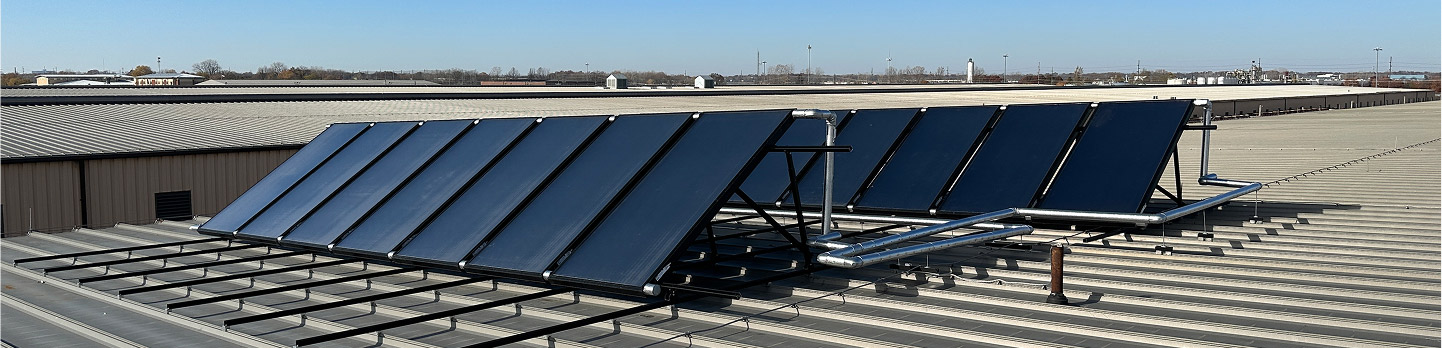
SunEarth evaluated, restored, recommissioned, and returned the system to service, helping bring a landmark solar thermal asset back into productive operation.
This project was not about making a claim that the property avoided electrical upgrades.
It was about something more direct and equally important:
The property had a thermal energy asset in place — and made the decision to recover its value.
That decision matters.
Commercial solar thermal systems represent capital investment, engineering work, installed infrastructure, and long-term energy potential. When a system is underperforming or offline, the right evaluation can determine whether it can be restored, modernized, and returned to useful service.
At Gainey Ranch, the answer was yes.
Why restoring thermal infrastructure matters
Commercial solar thermal should not be viewed as disposable equipment.
When properly designed, maintained, and supported, these systems can provide value for decades. Even when a system needs attention, the first question should not always be whether to replace it with something entirely different.
The first question should be:
Can this renewable heat asset be brought back into service?
For commercial buildings, restoring an existing solar thermal system may support several goals:
- recovering value from installed infrastructure,
- improving long-term water-heating energy performance,
- supporting decarbonization objectives,
- reducing dependence on conventional water-heating energy,
- extending the useful life of a renewable energy investment,
- improving system visibility through modern controls,
- protecting prior capital investments.
That is a practical, business-minded approach to building energy management.
The SunEarth role: restoration, recommissioning, and controls
SunEarth’s work at Hyatt Regency Scottsdale extended beyond supplying equipment.
The project required system evaluation, technical coordination, recommissioning support, and modernization of key components. The restored system includes SunEarth solar collectors and a SolFlux controller, helping bring the system in line with current operational expectations.
That is important because today’s commercial solar thermal systems are not just about collectors.
They are complete renewable heat systems.
A commercial solar water heating system may include collectors, pumps, controls, storage, heat exchangers, valves, sensors, piping, insulation, backup water-heating equipment, and building operations requirements. When these pieces work together properly, the system can support meaningful hot water energy reduction.
Modern controls play a critical role in that outcome.
With SolFlux, SunEarth is helping shift commercial solar thermal from a component conversation to a system-performance conversation. Controls make the system smarter, easier to understand, and better aligned with today’s expectations for visibility and operational reliability.
Reducing energy costs starts with understanding the load
The title of this piece is important:
Reducing Building Energy Costs Without Increasing Electrical Load
That does not mean every solar thermal project is tied to an electrical-capacity issue.
It means commercial buildings should not assume that every energy problem must be solved by adding more electrical demand.
Hot water is a thermal load.
If a building uses large amounts of hot water, the project team should evaluate ways to reduce the energy required to produce that heat. Solar thermal is one of the few renewable technologies that addresses hot water directly.
For hotels and resorts, this is especially relevant.
Guest rooms, kitchens, laundries, pools, spas, and back-of-house operations can all contribute to daily hot water demand. Managing that thermal load can be part of a larger strategy to control operating costs and improve long-term energy performance.
The Gainey Ranch project demonstrates that this opportunity does not only apply to new construction.
It can also apply to existing systems that deserve a second look.
A proof point for commercial solar thermal
The restored Hyatt Regency Scottsdale system is more than a successful recommissioning project. It is a reminder that commercial solar thermal systems are long-term energy assets.
For building owners, facility teams, engineers, and contractors, that distinction matters. A solar thermal system is not simply equipment on a roof. It is renewable heat infrastructure tied directly to domestic hot water demand, operating costs, controls, storage, maintenance, and long-term building performance.
At Gainey Ranch, SunEarth helped bring that infrastructure back into service.
That is the proof point.
Commercial solar thermal remains relevant when it is properly evaluated, supported, modernized, and integrated into a building’s broader energy strategy.
As SunEarth heads into ASPE 2026, the RTC Summit, and AHR Expo 2027, this is the conversation we are bringing forward: renewable heat is not a legacy concept. It is a practical strategy for commercial buildings with real thermal demand.
This is not just about new systems. It is about helping project teams understand where solar thermal can create value — whether through new construction, retrofit design, system modernization, or recommissioning existing assets.
Commercial buildings do not only need power. They need heat. And in the right applications, that heat can be renewable.
The broader lesson for commercial buildings
Many commercial buildings are looking for ways to reduce costs and improve performance without adding unnecessary complexity.
For buildings with significant hot water demand, the thermal side of the energy equation deserves more attention.
A smart energy strategy should ask:
- How much energy is being used to produce hot water?
- Is the existing system performing as intended?
- Are there renewable heat assets already on-site?
- Can an existing system be recommissioned?
- Would modern controls improve visibility and operation?
- Where can renewable heat reduce conventional energy use?
These are practical questions.
They are also the questions that lead to better long-term energy decisions.
Commercial solar thermal is still working
The best proof that commercial solar thermal remains relevant is not theoretical.
It is found in real systems, real buildings, and real projects where renewable heat continues to serve commercial operations.
At Hyatt Regency Scottsdale Resort & Spa at Gainey Ranch, SunEarth helped restore and recommission a landmark solar thermal system, returning existing renewable heat infrastructure to service and supporting the property’s continued investment in long-term energy performance.
That is the kind of story commercial building owners should be paying attention to.
Not every solution requires adding another electrical load.
Sometimes the smarter move is to recover, modernize, and use the renewable heat infrastructure already available.
Put Renewable Heat Back on the Table
Commercial buildings are being asked to reduce operating costs, support decarbonization goals, and make smarter use of existing infrastructure. For properties with significant domestic hot water demand, solar thermal deserves a closer look, whether the opportunity is a new system, a retrofit, or the recommissioning of an existing renewable heat asset.
As SunEarth heads into ASPE 2026, the RTC Summit, and AHR Expo 2027, we’re continuing the conversation with engineers, contractors, facility teams, and building owners who are ready to evaluate heat as its own energy strategy.
Have a commercial hot water project, existing solar thermal system, or building energy challenge worth reviewing? Let’s talk before the next round of design decisions is made.