
Massachusetts Solar Hot Water Incentives: What Homeowners and Contractors Should Know
Massachusetts continues to recognize solar hot water as a renewable-energy option, with potential state tax credits, Alternative Energy Certificates, and financing resources for qualifying installations.
When homeowners consider solar energy, electricity generation often receives most of the attention. But another significant household energy requirement is heating water for showers, laundry, cleaning, and everyday use.
In Massachusetts, solar hot water remains part of the state's clean-energy landscape, with financial incentives that may help qualifying homeowners evaluate a system.
The Massachusetts Clean Energy Center (MassCEC) identifies several resources specifically relevant to solar hot water, including Alternative Energy Certificates, a state renewable-energy tax credit, and potential financing options.
Alternative Energy Certificates
Massachusetts' Alternative Energy Certificate (AEC) program provides a mechanism for eligible renewable thermal technologies, including solar hot water, to receive financial value for qualifying energy production.
According to MassCEC, an illustrative two-collector solar hot water system could receive approximately 100 AECs, with an estimated value of $400 to $1,000.
Actual certificate quantities and values depend on applicable program rules and market conditions. This example is not a guaranteed payment.
Massachusetts renewable-energy tax credit
Qualifying homeowners may also be eligible for a Massachusetts state income-tax credit equal to 15% of eligible renewable-energy expenditures, up to $1,000.
The credit applies to qualifying systems installed for a principal residence and is subject to state tax requirements.
Homeowners should consult a qualified tax professional to determine eligibility and how the credit applies to their installation.
Financing and municipal opportunities
MassCEC also identifies potential financing options and recommends checking incentives offered by local Municipal Light Plants.
Program participation and financing eligibility vary. Homeowners should confirm that their proposed solar hot water system and installation meet the requirements of the relevant provider before assuming assistance is available.
What should homeowners ask before installing solar hot water?
Incentives can improve the economics of a project, but system suitability should come first.
A qualified installer should evaluate:
-
Household hot-water consumption.
-
Roof orientation, shading, and available collector area.
-
Climate and freeze-protection requirements.
-
Existing water-heating equipment.
-
Storage capacity and installation conditions.
-
Applicable equipment certifications and incentive requirements.
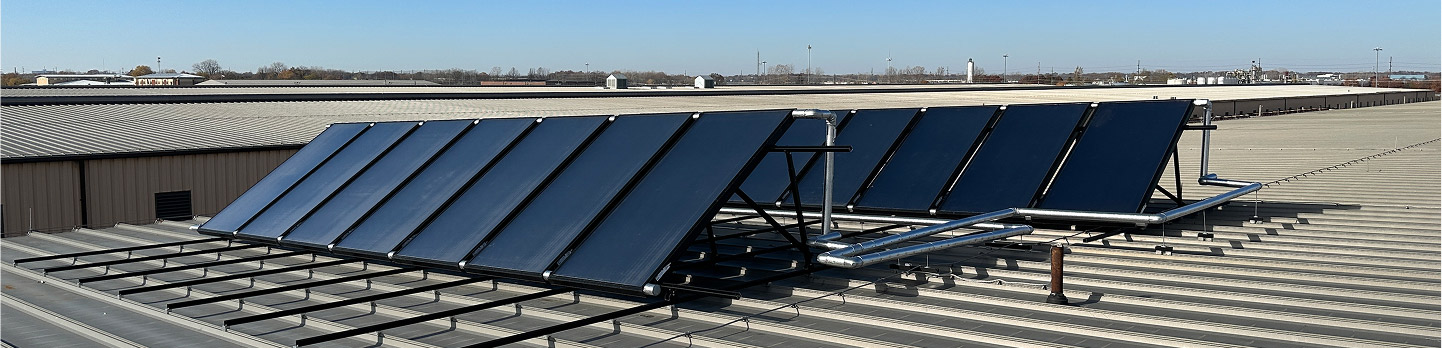
Solar thermal systems use collectors to transfer solar energy into heat, which can reduce the amount of energy required from conventional water-heating equipment.
The portion of demand supplied by solar energy varies with system design, location, and actual usage.
A renewable-energy option worth evaluating
Massachusetts homeowners and contractors have an opportunity to consider solar hot water as part of a broader approach to household energy efficiency.
Rather than selecting equipment based on incentives alone, the strongest projects begin with the home's hot-water demand and then determine which technologies and available programs make sense.
SunEarth manufactures solar thermal collectors and system components for residential and commercial water-heating applications and supports contractors evaluating renewable hot-water solutions.
Considering a solar hot water installation? Explore SunEarth's solar thermal technologies and discuss your project with a qualified installer.
Incentive resources
Incentives and financing are subject to eligibility, funding, and program changes. Estimated incentive values are illustrative and are not guaranteed.