
Electrification Is Important. So Is Renewable Heat.
Electrification is one of the most important energy trends shaping commercial buildings.
Across the world, policymakers, utilities, engineers, and building owners are evaluating how to replace fossil-fuel equipment with efficient electric technologies. Heat pumps, electric vehicles, battery storage, renewable electricity, and advanced building controls are all part of the transition.
But electrification is not the entire story.
Commercial buildings do not only need electricity.
They also need heat.
That distinction matters because water heating, laundry, kitchens, pools, sanitation, and process hot water are thermal loads. Treating every thermal load as a future electrical load may not always be the most practical, economical, or resilient path forward.
For many commercial buildings, renewable heat deserves its own strategy.
Why this conversation is happening now
Electricity demand is rising.
The U.S. Energy Information Administration’s July 2026 Short-Term Energy Outlook notes that U.S. natural gas consumption in the electric power sector is expected to set a record next year, driven largely by rising electricity demand, an expanded natural-gas generating fleet, and relatively low natural gas prices.
That means even as renewable electricity expands, utilities and grid operators are still preparing for higher overall demand.
At the same time, Europe is moving aggressively toward electrification. On July 17, 2026, the European Commission introduced an Electrification Action Plan intended to accelerate the shift from fossil fuels to electricity across industry, transport, and buildings.
Solar Heat Europe responded the same day with an important clarification: electrification is a step in the right direction, but more clean technologies will be needed to reach climate neutrality. The organization specifically called attention to the delayed Heating and Cooling Action Plan and the need for renewable heat technologies to remain part of the decarbonization pathway.
That is the balanced message commercial building owners need to hear:
Electrification matters. Renewable heat matters too.
Heat is not just another electrical load
A building’s energy use is not one thing.
Some loads require electricity: lighting, controls, plug loads, refrigeration, ventilation, computing, cooling, and many mechanical systems.
Other loads require heat: domestic hot water, laundry, kitchens, pools, spas, sanitation, and low-temperature process applications.
When project teams separate electrical loads from thermal loads, they can make better decisions.
Some loads may be ideal for electrification. Others may be better served by reducing the need for conventional energy before adding new electric demand.
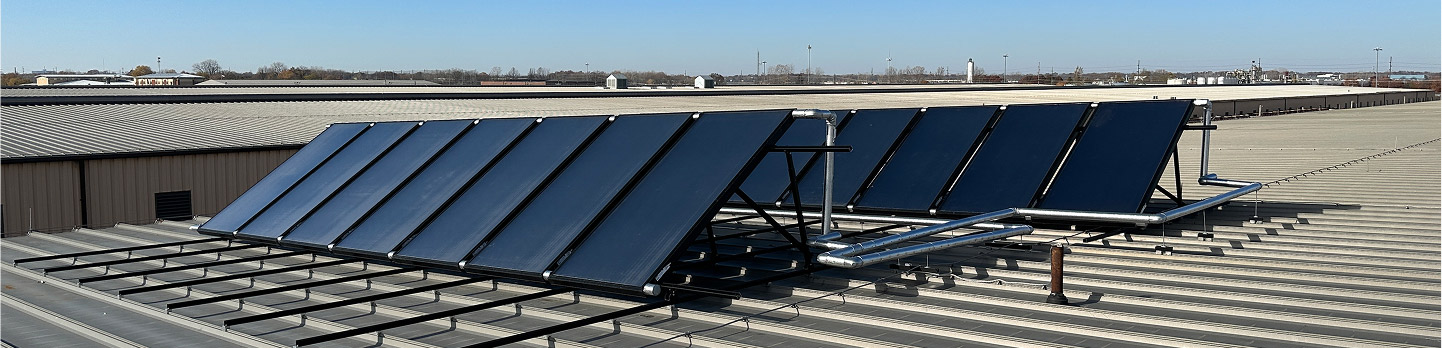
That is where commercial solar thermal can play an important role.
Solar photovoltaic systems convert sunlight into electricity.
Solar thermal systems convert sunlight directly into usable heat.
For buildings with significant hot water demand, solar thermal can reduce the amount of electricity, natural gas, propane, or other conventional energy required to produce hot water.
The goal is not to reject electrification.
The goal is to use the right technology for the right load.
Renewable heat supports smarter decarbonization
A balanced commercial energy strategy may include PV, heat pumps, battery storage, building controls, efficient equipment, and solar thermal.
These technologies do not need to compete with each other.
They can complement each other.
Solar thermal is especially relevant when a building has consistent hot water demand. That includes applications such as:
- Hotels and resorts
- Multifamily housing
- Healthcare facilities
- Commercial laundries
- Restaurants and institutional kitchens
- Car washes
- Schools and universities
- Correctional facilities
- Food and beverage operations
In these buildings, renewable heat can help reduce long-term operating costs while preserving electrical capacity for systems that truly need electricity.
That can matter more as buildings add EV charging, cooling loads, electric equipment, and new digital infrastructure.
The grid does not need every building load to become electric
Electrification will continue to grow. That is not in question.
The more important question is how intelligently it is applied.
As electricity demand increases, commercial buildings may face new questions:
- Is electrical capacity already constrained?
- Will future upgrades require utility coordination?
- Are demand charges affecting operating costs?
- Should domestic hot water be evaluated separately?
- Can renewable heat reduce energy use before additional electrical load is added?
These are practical engineering and financial questions.
They are also marketing and communications opportunities for companies that can explain renewable heat clearly.
For SunEarth, this is where the message becomes powerful:
Commercial solar thermal helps buildings reduce energy costs and support decarbonization without turning every hot water load into another electrical demand.
Each audience is slightly different, but the core message is the same:
Heat deserves a seat at the decarbonization table.
A better question for commercial buildings
The question is not:
Should we electrify or use renewable heat?
The better question is:
Which energy loads should be electrified, which loads can be reduced, and where does renewable heat deliver the greatest value?
For commercial buildings with meaningful hot water demand, solar thermal remains highly relevant.
It is proven.
It is practical.
It addresses heat directly.
And in an era of rising electricity demand, that matters.
Electrification is important.
So is renewable heat.