
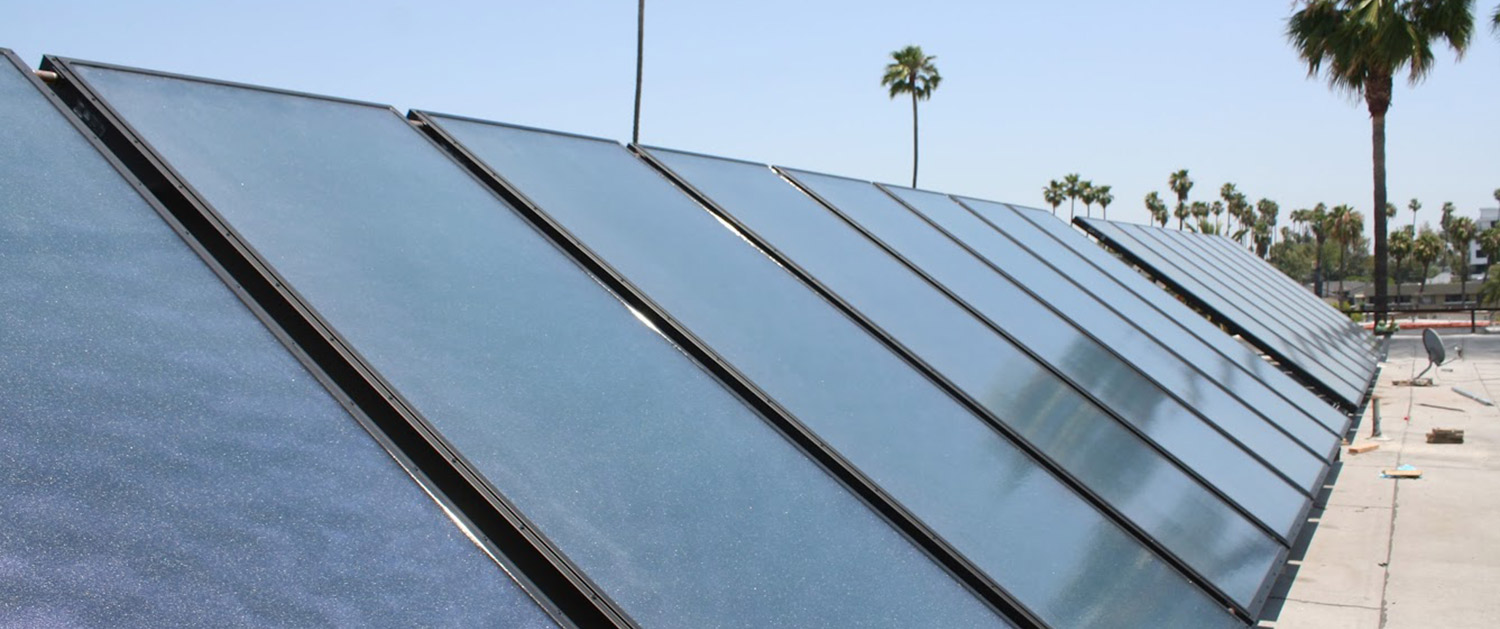

Solar Water Heating for Dairy Farm Sanitation & Processing
Sustainable, Cost-Effective Solutions for Dairy Operations
The dairy industry relies heavily on hot water for sanitation, processing, and equipment cleaning, making energy costs a significant operational expense. With heating water accounting for nearly 40% of total energy usage in a typical dairy barn, finding a cost-effective and sustainable solution is crucial.
Dairy operations need consistent, high-temperature water for sanitation and equipment cleaning. SunEarth’s solar water heating systems deliver solar thermal systems tailored to dairy cleaning cycles, helping farms reduce energy bills while staying compliant and supporting environmentally responsible dairy production.
Decarbonization and Scope 1 Emissions Reduction
Solar thermal is a natural fit for dairy farms seeking to reduce propane or diesel use. By transitioning to solar, operators cut emissions, meet sustainability standards, and qualify for agricultural energy efficiency programs.
Key Applications of Solar Water Heating in Dairy Farming
- Milking Parlors & Tank Cleaning – Maintain sanitary conditions by ensuring hot water for cleaning milk storage tanks and milking systems.
- Sterilization & Equipment Washing – Provide high-temperature water for cleaning pipes, dairy parlors, and machinery.
- Processing & Pasteurization – Support milk processing and dairy product manufacturing with consistent, heated water supply.
- Restrooms & Staff Facilities – Ensure reliable hot water for farmworkers’ hygiene needs.
- Preheating Systems – Reduce the energy load on conventional water heaters by using solar-preheated water.
Tailored Energy Solutions to Fit your Needs
Contact SunEarth for a free consultation and discover how solar water heating can transform your home.
Why Dairy Farms Choose Solar Water Heating
- Lower Operational Costs – Reduce hot water heating expenses by up to 70% annually, improving profit margins.
- Reliable High-Temperature Water Supply – Ensure consistent hot water for sanitization and processing.
- Meet State & Federal Health Standards – Comply with strict dairy industry hygiene regulations.
- Enhance Brand Value – Market your dairy as eco-conscious by highlighting sustainable production practices.
- Minimal Maintenance & Long-Term Savings – Solar thermal systems are low-maintenance and built to last for decades.
- Eligible for Rebates & Incentives – Many states offer grants, tax credits, and USDA funding to support solar energy adoption in agriculture.
Solar Water Heating for Dairy Farm Sanitation and Processing
Dairy operations need consistent, high-temperature water for sanitation and equipment cleaning. SunEarth delivers solar thermal systems tailored to dairy cleaning cycles, helping farms stay compliant and reduce energy bills.
Decarbonization and Scope 1 Emissions Reduction
Solar thermal is a natural fit for dairy farms seeking to reduce propane or diesel use. By transitioning to solar, operators cut emissions, meet sustainability standards, and qualify for agricultural energy efficiency programs.
Proven Success
Featured ProjectsHy-Point Dairy Farm – Delaware
Installed solar water heating to support dairy processing operations. Integrated solar electric (PV) systems with three truckports to enhance renewable energy efficiency. Significantly reduced utility costs while maintaining high standards of dairy production.
Nationwide & Global Dairy Installations
SunEarth’s solar water heating systems are in use at dairy farms across the U.S., helping farmers lower costs and improve sustainability.

Frequently Asked Questions
Running a dairy farm means hot water, energy use, sanitation, and cost control are part of everyday life. We know firsthand the challenges: maintaining equipment, meeting health standards, managing your herd and keeping energy bills in check. Below are the common questions we hear from dairy farmers, about solar water heating, heat recovery, system reliability, incentives, and how this all works in real agricultural settings, with answers to help guide their decisions.
- Sustainable Dairy Production – Reduce your carbon footprint while supporting clean energy initiatives.
- Lower Energy Costs & Increase Profit Margins – Free up funds for herd expansion, equipment upgrades, and operational improvements.
- Enhance Your Brand’s Eco Reputation – Differentiate your dairy business with sustainability marketing.
- Stable & Predictable Energy Supply – Protect against fluctuations in gas and electricity prices.
Refrigeration heat recovery (RHR) units can usually supply a large fraction of your hot water demand, though not 100%. In practice, a well-designed RHR can preheat 40–60% of the water needed for washdown and cleaning. Industry literature often cites “up to 50% of a farm’s water-heating requirements can be met through heat-recovery systems.” The exact percentage depends on how much milk you’re cooling (and thus waste heat available) relative to your hot water usage. Some studies estimate an efficient heat recovery unit can capture 20–60% of the energy used to cool milk and put that into your hot water supply, effectively cutting your traditional water-heating load in half.
This is a common question. While you can heat water with solar PV (by generating electricity and using it to run electric heating elements), solar thermal collectors are far more efficient at directly producing heat for water. A typical solar hot water collector converts around 50–70% of the sun’s energy into usable heat, whereas PV panels might convert 15–20% of sunlight into electricity, and then that electricity creates heat at 100% efficiency in a heating element. In practice, you’d need roughly 2–3 times more roof area in PV panels (and a larger upfront investment) to get the same water-heating output that a solar thermal system provides. Put another way, solar thermal delivers a lot more BTUs of heat per dollar spent when the end use is hot water or space heat. Additionally, solar thermal systems store heat in inexpensive tanks of water, whereas a PV system usually needs costly batteries or sells power back to the grid if generation exceeds immediate use. Solar thermal is a more direct, purpose-built solution for hot water – it has virtually no operating cost and integrates with your existing water tank. By contrast, using PV to heat water means you’re effectively converting sunlight to electricity and then to heat, losing some efficiency in the process. That said, PV is more versatile – the same solar panels can power many farm needs (lighting, pumps, etc.), not just water heating. In fact, some farms choose to install PV and then use some of the power for water heating. But if your primary goal is to offset water heating fuel, solar thermal panels are generally the most cost-effective and efficient tool for the job. Many dairy operations use both technologies side-by-side: PV to reduce electricity costs and solar thermal to handle hot water needs. In summary, solar thermal vs. PV isn’t an either/or – but for dedicated water heating, solar thermal has a strong efficiency advantage (capturing heat directly), yielding more usable hot water per square foot of collector area.
Not usually. In almost all dairy applications, the solar system is set up to preheat water and works in tandem with your conventional water heater (electric, propane, etc.) which remains in place as a backup. This is because solar output varies with sun and weather, and dairy sanitation requires guaranteed hot water at high temperatures (often 160–180 °F). During sunny periods, the solar storage tank will deliver hot (or at least warm) water to your wash system, greatly reducing the load on the primary heater. If the solar-heated water isn’t hot enough or the sun hasn’t shone, the existing heater will kick in to boost the temperature to the required level. In practice, the solar thermal system is plumbed “upstream” of the traditional heater – meaning cold water first goes through the solar pre-heat tank, and then into your regular heater which tops it off as needed. This ensures you always have consistent hot water for milking and cleaning. Given Solar’s fluctuating nature, neither solar nor heat-recovery alone should be solely relied upon for 100% of hot water on a dairy. You’ll keep your existing water heater (or an upgraded high-efficiency one) as part of the system. Over the year, the solar will significantly cut how often and how long that backup heater has to run – but it’s still there as a safety net. Bottom line: solar thermal doesn’t eliminate the need for a backup heater, but it will dramatically reduce the fuel or electricity that backup uses. (Some off-grid farms do attempt all-solar hot water with very large arrays and seasonal storage, but for most dairies maintaining a conventional heater is the prudent choice.)
They can significantly cut your water heating bills, often by 50–70% or more annually. Dairy farms typically devote around 20–30% of their total energy use – electric and fuel - to heating water, so there are big savings to be had.
Real-world results: one farm-scale solar hot water system is reported to decrease water-heating costs by about 60% per year according to Guelph Solar. In Massachusetts, agricultural experts note that a dairy where 40% of energy went to water heating could reduce those heating costs by up to 85% with solar. SunEarth’s own data show hot water expenses dropping “by up to 70%” after installing their solar thermal systems. The exact savings will depend on how large the solar array is relative to your needs (a larger system can offset a higher percentage of your usage) and what fuel you’re offsetting (propane and electric heat are costly, so replacing those yields big dollar savings). Importantly, even partial solar heating has a compounding effect: every BTU from the sun is a BTU you don’t pay for in propane, natural gas, or electricity. Farmers who have gone solar report noticeable reductions in their utility bills and fuel deliveries. In summary, you can realistically expect on the order of 50%+ reduction in water-heating energy costs, and in optimal setups perhaps two-thirds or more of your hot water is solar-heated – translating to thousands of dollars saved annually for a typical dairy.
Yes. Solar thermal systems can operate effectively all U.S. states and climates, even in regions with cold winters or frequent clouds. “All U.S. states receive enough sunlight to run solar hot water systems,” according to the University of Maryland Extension. Naturally, sunnier locations, e.g. the Southwest, will yield more energy, but even places like the Upper Midwest or Pacific Northwest have enough solar resources to make a dent in water heating bills. In colder/cloudier climates, you may just need a slightly larger collector area to achieve the same output, and the solar fraction, which is the percentage of heat provided by the sun, will be lower in winter.
Similarly, in cold U.S. regions, well-designed solar thermal setups can often provide 50% or more of water heating needs over the year (with the remainder supplied by a backup heater). The key is proper freeze protection and sizing for winter conditions. In short, solar water heating is viable almost anywhere: even if your farm isn’t in the Sun Belt, the sun can still significantly offset your water-heating fuel use.
The payback period can range widely depending on your farm’s hot water usage, fuel costs, and available incentives. For example, without any grants a typical system might have around a 10-year simple payback if it’s offsetting propane or grid electricity. If fuel prices rise or the system is heavily used, payback accelerates. Financial incentives can substantially shorten this timeline, federal tax credits and programs like USDA REAP can cut net costs by 30–50%, potentially bringing payback down to 5–8 years in favorable cases.
Absolutely. In fact, this is where solar thermal shines, it integrates seamlessly with existing systems to maximize efficiency and minimize fuel costs.
Per SunEarth’s field applications, most dairy farms use solar water heating as a preheat stage, feeding solar-heated water into a conventional water heater, boiler, or heat recovery unit. This layered approach lets each system do what it does best:
- Solar collectors capture renewable heat year-round whenever the sun is available.
- Heat recovery units capture waste heat from milk cooling equipment during milking cycles.
- Boilers or backup heaters only engage when additional heat is needed.
The result is a balanced, energy-smart system where the sun and your equipment work together, not against each other.
For example, a farm running a refrigeration heat recovery unit can add a solar storage tank upstream of the existing heater. On sunny days, the solar system carries most of the load; during milking, recovered heat boosts the preheated water even more. The boiler only tops off the temperature as needed, dramatically reducing propane or electric consumption.
In practice, solar thermal complements heat recovery and traditional boilers, creating a hybrid system that delivers consistent hot water with the lowest possible operating cost. It’s an energy stacking strategy that turns every BTU into value, and every sunrise into savings.
Heat recovery systems capture waste heat from milk cooling and typically deliver short-term savings with lower upfront costs. A solar thermal system, however, transforms that same daily energy demand into a long-term asset, offsetting propane or electric heating with free, renewable heat from the sun.
Per SunEarth’s agricultural field data, a properly sized solar water heating system for a mid-sized dairy often costs between $8,000 and $15,000 installed, depending on storage and collector area. The return is measured not just in years, but in decades of reduced fuel costs, improved system efficiency, and measurable Scope 1 emission reductions.
Heat recovery can preheat water efficiently but depends entirely on milk cooling load and doesn’t operate when compressors aren’t running. Solar thermal systems work year-round, even on cloudy days, delivering predictable, renewable heat output that complements, rather than replaces, other technologies.
In short:
- Heat recovery = short-term savings, limited operation window.
- Solar water heating = long-term energy independence and stable cost reduction.
Both systems can coexist on a dairy, but only solar thermal locks in resilience and energy sovereignty, a critical advantage as farms look toward decarbonization and self-sufficiency.
Upgrade Your Dairy Farm with Solar Water Heating
Whether you manage a small family-owned dairy or a large-scale production facility, SunEarth’s solar water heating systems provide a cost-effective, environmentally responsible solution for your hot water needs.
Maximize efficiency and sustainability! Contact SunEarth today to explore custom solar water heating solutions for your dairy farm.