
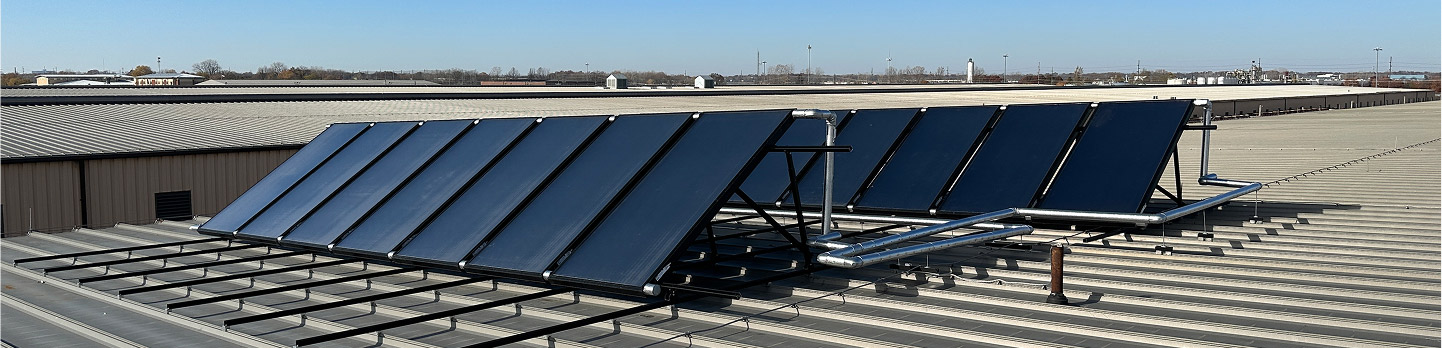
How solar thermal supports high-demand residential buildings with scalable, cost-effective hot water solutions.
High-Demand Systems Require a Different Approach
Multifamily buildings present a unique challenge when it comes to hot water.
Unlike single-family homes, these systems must serve:
- Dozens or hundreds of units
- Continuous, overlapping demand cycles
- Peak usage periods that strain traditional systems
Conventional approaches, whether gas or electric, often result in:
- High operating costs
- System inefficiencies
- Increased infrastructure requirements
As buildings scale, so does the importance of centralized system design.
Why Central Plants Are the Standard
Centralized hot water systems consolidate generation, storage, and distribution into a single plant serving the entire building.
This approach allows for:
- More efficient equipment utilization
- Simplified maintenance
- Better control over system performance
For multifamily applications, central plants are not just preferred, they are essential for managing load effectively.
Where Solar Thermal Fits
Solar thermal integrates naturally into centralized systems.
Instead of replacing existing equipment, it enhances it by:
- Providing preheated water to the system
- Reducing the load on boilers or electric heaters
- Operating as a primary heat source during peak solar production
This makes solar thermal particularly effective in buildings with:
- Consistent daily hot water demand
- Shared infrastructure
- Long-term ownership or operational focus
Designing for Performance
Successful multifamily solar thermal systems are built around three core elements:
1. Collector Array Sizing
Systems must be sized based on actual building demand—not assumptions.
Factors include:
- Number of units
- Occupancy patterns
- Daily hot water usage
Proper sizing ensures consistent contribution without overbuilding the system.
2. Thermal Storage Integration
Storage is critical in balancing supply and demand.
Well-designed systems use storage to:
- Capture solar energy during peak production
- Deliver hot water during high-demand periods
- Stabilize system performance
3. System Integration
Solar thermal works best as part of a hybrid system.
Integration with:
- Boilers
- Heat pumps
- Recirculation systems
Allows for:
- Redundancy
- Flexibility
- Optimized performance across varying conditions
Performance and Payback
For multifamily properties, solar thermal delivers value in multiple ways:
Reduced Operating Costs
By offsetting fuel or electricity consumption, solar thermal lowers monthly utility expenses.
Improved Energy Stability
Energy costs become more predictable, reducing exposure to market fluctuations.
Long-Term Asset Value
Buildings with integrated renewable systems are better positioned for:
- Regulatory compliance
- Tenant appeal
- Long-term ownership strategies
Aligning with Modern Building Requirements
As energy codes and decarbonization goals evolve, multifamily developments are under increasing pressure to reduce emissions and improve efficiency.
Solar thermal supports these objectives by:
- Reducing Scope 1 emissions
- Supporting compliance with energy codes
- Complementing electrification strategies
Built for Scale
Solar thermal systems are inherently scalable.
From mid-size developments to large residential complexes, they can be designed to match:
- Load requirements
- Available space
- Budget constraints
This flexibility makes them a practical solution across a wide range of multifamily applications.
A System-Level Advantage
Multifamily buildings demand solutions that perform consistently under pressure.
Solar thermal delivers:
- Reliable hot water production
- Reduced operational costs
- Integration into modern system design
When designed correctly, it becomes a foundational component of the building’s energy strategy.