
California's New Title 24 Energy Code Is Here. Why Solar Thermal Still Matters.
January 1, 2026 marked the beginning of a new era for building energy compliance in California.
The 2025 California Building Energy Efficiency Standards, commonly known as Title 24 Part 6, are now in effect for projects submitted for permit on or after January 1, 2026. These updated standards continue California's push toward greater energy efficiency, electrification, carbon reduction, and long-term building performance.
For architects, engineers, developers, and building owners, the question is no longer what the changes will be. The question is how to successfully design projects that meet the new requirements while controlling costs, maximizing performance, and delivering long-term value.
One technology that continues to provide significant advantages in this evolving landscape is solar water heating.
Understanding the Current Title 24 Landscape
The 2025 Energy Code places increased emphasis on:
-
Building electrification
-
Heat pump water heating
-
Improved building efficiency
-
Renewable energy integration
-
Battery storage readiness
-
Reduced greenhouse gas emissions
-
Whole-building performance
While many discussions surrounding Title 24 focus on photovoltaic systems and heat pumps, domestic hot water remains one of the largest energy loads in many building types.
Hotels, multifamily housing, student housing, military facilities, hospitals, fitness centers, and commercial facilities often consume significant amounts of energy simply to produce hot water.
Reducing that load remains one of the most effective ways to improve overall building performance.
Why Solar Thermal Remains Relevant
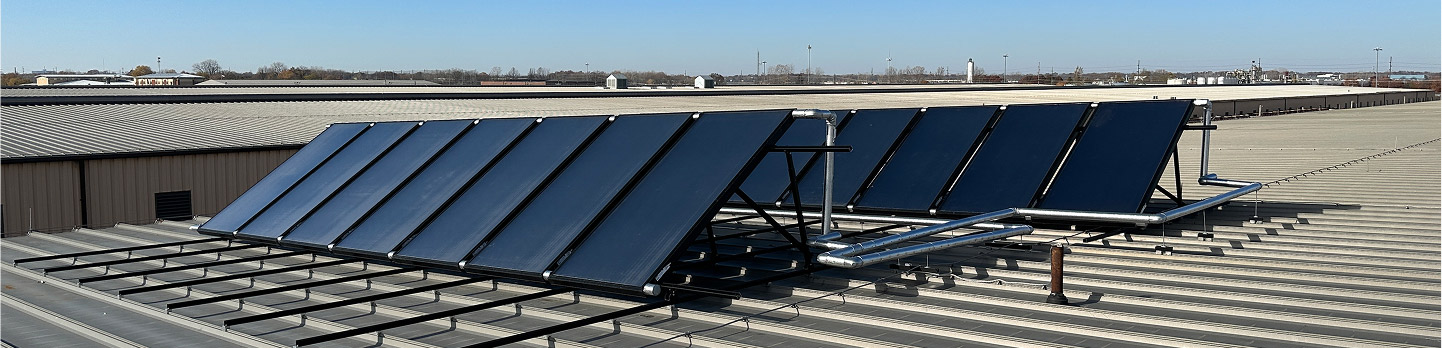
Solar thermal technology directly addresses water heating energy consumption by converting sunlight into usable thermal energy with exceptional efficiency.
Unlike technologies that first convert sunlight into electricity before powering a water heater, solar thermal systems capture the sun's energy directly and transfer it into stored hot water.
This allows building owners to offset a substantial portion of their annual water-heating demand using renewable energy.
For projects with high domestic hot water loads, solar thermal remains one of the most efficient renewable technologies available.
Supporting Compliance Through Performance
California's Energy Code continues to offer both prescriptive and performance compliance approaches.
While prescriptive pathways establish specific requirements for equipment and building systems, performance pathways allow project teams to demonstrate overall building efficiency through energy modeling.
This flexibility creates opportunities for project teams to evaluate multiple strategies that contribute to overall building performance.
By reducing domestic hot water energy consumption, solar thermal systems can support broader project energy goals while helping owners lower long-term operating costs.
For many projects, solar thermal becomes more than a renewable energy technology. It becomes part of a comprehensive building performance strategy.
The Value of Thermal Energy Storage
One of the most overlooked advantages of solar water heating is built-in energy storage.
Every solar thermal system stores collected energy as hot water, effectively creating a thermal battery.
Unlike electrical battery systems, thermal storage is often simpler, proven, and highly cost-effective for domestic hot water applications.
This allows buildings to collect energy during peak solar production and utilize that energy when hot water demand occurs later in the day.
As California continues exploring demand management and grid resilience strategies, thermal storage offers a practical solution that has been successfully deployed for decades.
Applications Where Solar Thermal Excels
Solar water heating continues to provide exceptional value in applications with significant and predictable hot water demand, including:
-
Multifamily housing
-
Hotels and hospitality
-
Military housing
-
Student housing
-
Hospitals and healthcare facilities
-
Correctional facilities
-
Athletic facilities and recreation centers
-
Commercial laundry operations
-
Pool heating applications
In these environments, reducing water-heating energy consumption can produce meaningful long-term operational savings while supporting sustainability objectives.
Looking Forward
The implementation of the 2025 Energy Code represents another step toward California's long-term energy and decarbonization goals.
As building standards continue to evolve, successful projects will increasingly depend on selecting technologies that deliver measurable performance, operational savings, and long-term reliability.
Solar thermal continues to meet all three objectives.
For project teams evaluating compliance strategies under California's current Title 24 requirements, solar water heating remains a proven technology that can help reduce energy consumption, improve building performance, and support a more resilient energy future.
To learn how SunEarth solar water heating systems can support your next project, contact our team today.